Quarterly mortgage market summary
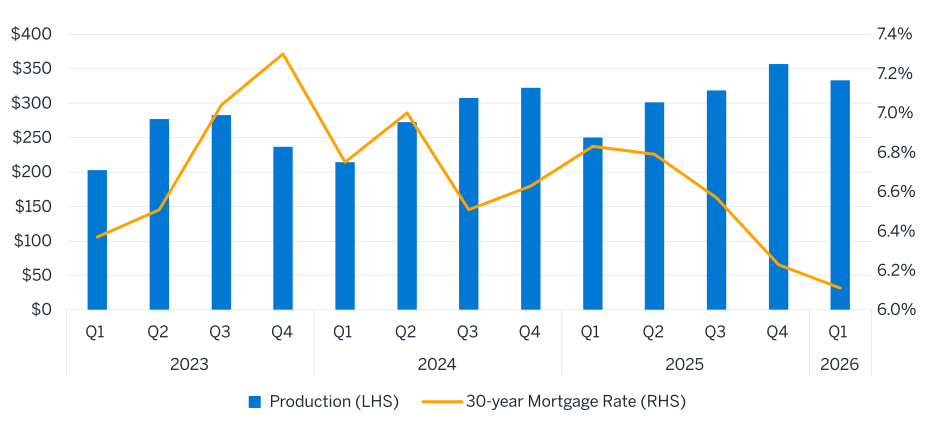
Agency mortgage securitizations increased 33% in the first quarter (Q1) 2026 on a year-over-year basis. Securitization volumes of new agency mortgages (Fannie Mae, Freddie Mac, and Ginnie Mae) were $333 billion for Q1, based on data from Milliman M-PIRe Securitization and Valuation Software.
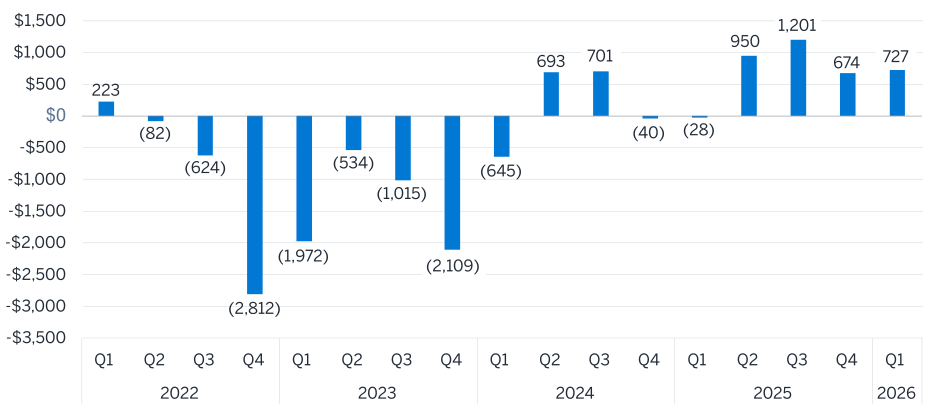
The Mortgage Bankers Association (MBA) reports that mortgage lenders remained profitable during the quarter, with the average lender generating a profit of $727 for each loan originated in Q1 2026, a slight uptick from $674 in Q4 2025 and a notable increase from a loss of $28 in Q1 2025.
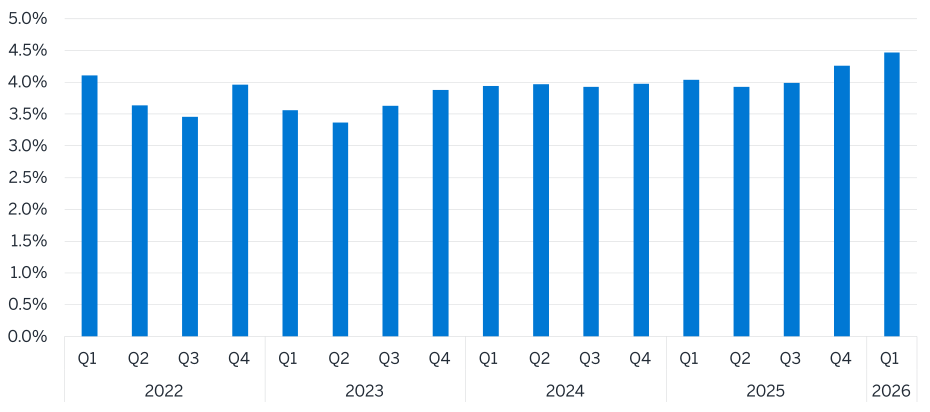
Agency mortgage loan delinquencies continue to rise, increasing to 4.5% in Q1 2026 compared to 4.3% in Q4 2025 and 4.0% in Q1 2025.
Purchase and refinance origination trends
Based on data from Milliman M-PIRe, single-family agency mortgage securitizations rose 33.2% year-over-year from $250 billion in Q1 2025 to $333 billion in Q1 2026, consistent with the downward movement in rates. This increase was due to a pickup in refinance activity, which rose 132% year-over-year, whereas purchase mortgage activity held flat year-over-year. The 30-year mortgage rate was down 12 basis points from Q4 2025 and down 72 basis points year-over-year, averaging 6.11% in Q1 2026.
Figure 1: Agency mortgage securitizations ($ billions) and the 30-year mortgage rate
Source: Milliman M-PIRe, FRED
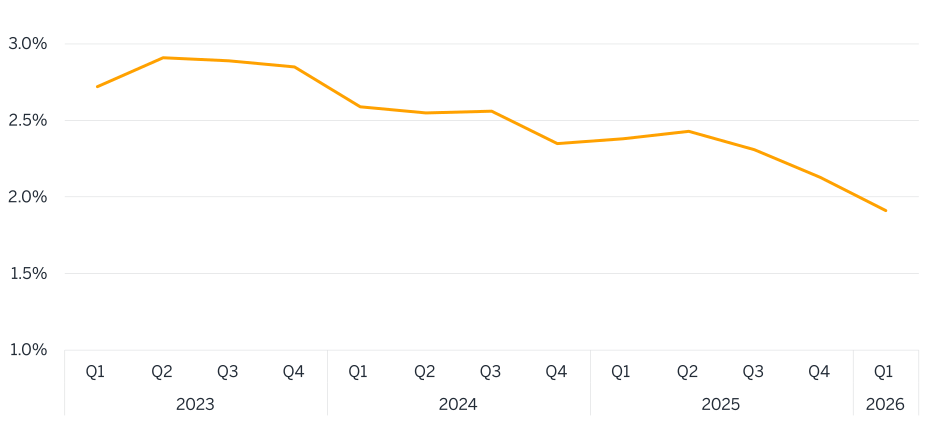
The Primary–Secondary (30-year mortgage to 10-year Treasury) spread was down 47 basis points year-over-year and down 22 basis points from Q4 2025, continuing the downward trend that began in Q2 2023. The Primary–Secondary spread has moved in general correlation with Treasury yields. However, in Q1 2026, the U.S. Government indicated an intention for Fannie Mae and Freddie Mac to expand their balance sheets through the purchase of mortgage-backed securities. This purchase activity may result in a de-coupling of the observed relationship between mortgage rates and the Primary–Secondary spread.
Figure 2: The primary-secondary spread
Source: FRED
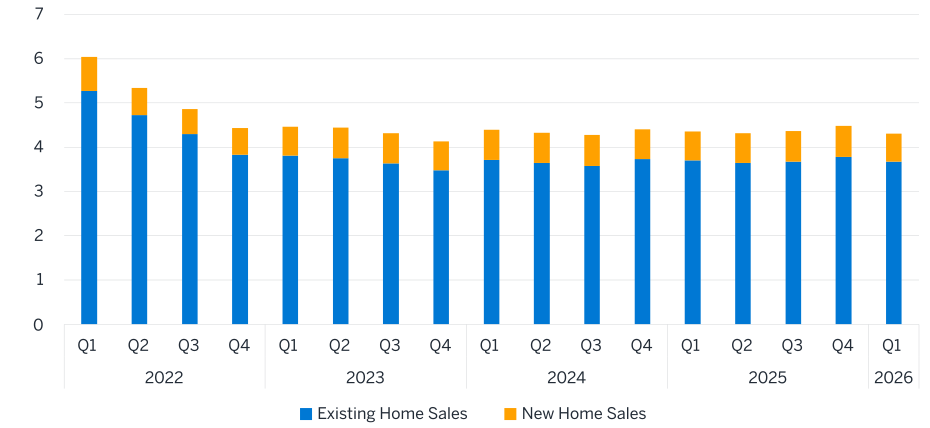
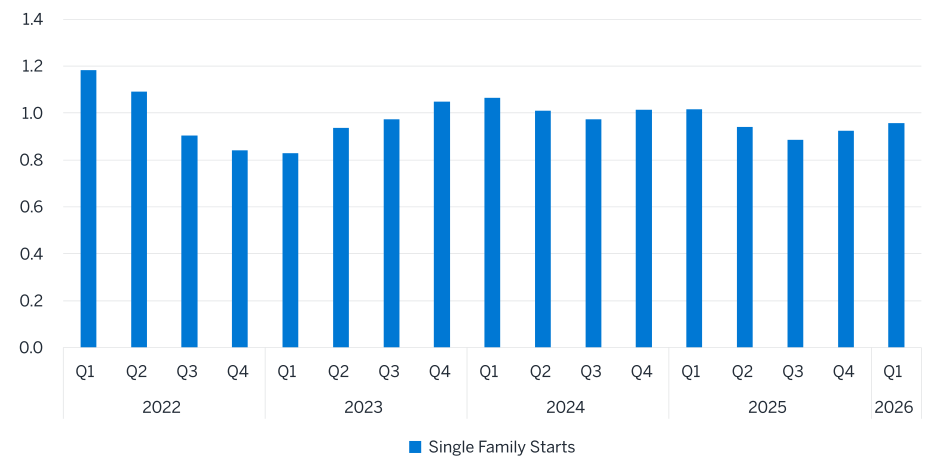
Existing home sales decreased in Q1 2026, with year-over-year sales down 1% and quarter-over-quarter sales down 3%. This decrease can be attributed to New Home Sales, which fell 3% year-over-year and 11% quarter-over-quarter. Both single-family housing permits and starts were down 6% and 9%, respectively, in Q1 2026 on a year-over-year basis.
Figure 3: Existing and new home sales annualized (millions)
Source: Moody’s Analytics
Figure 4: Single family starts annualized (millions)
Source: Moody’s Analytics
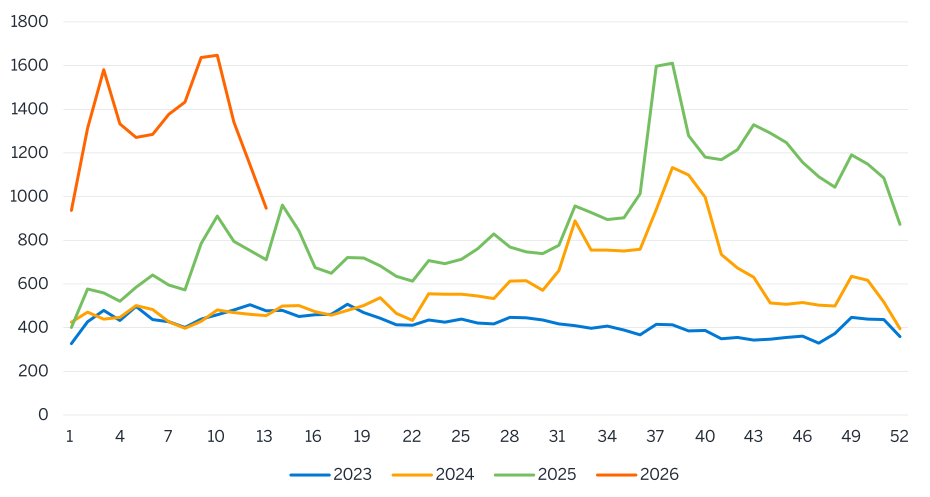
Figure 5: MBA purchase application index (by week)
Source: MBA
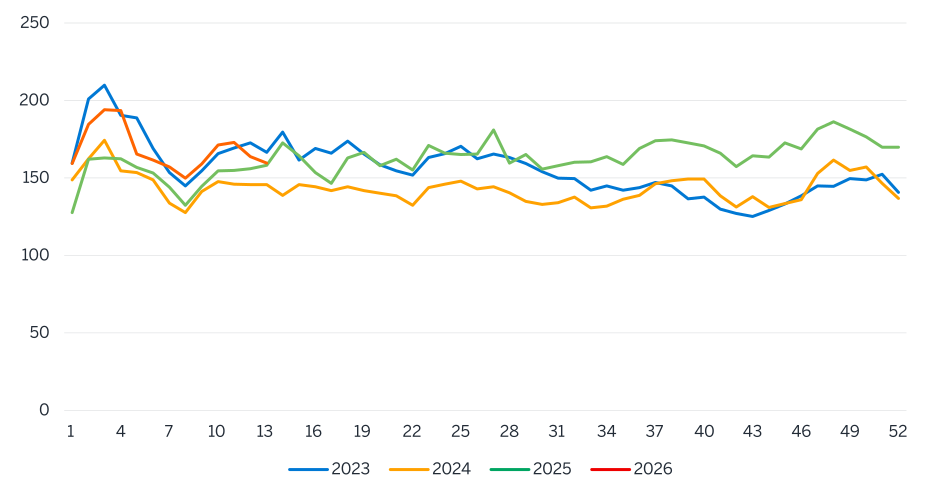
Figure 6: Refinance application index (by week)
Source: MBA
Mortgage lenders and their financial performance
In Q1 2026, mortgage lenders earned $727 for every loan originated in the quarter, a material increase from the $28-per-loan loss in Q1 2025. This improvement in lender profitability provides further evidence that lenders continue to enjoy a more favorable market to drive financial results.
Figure 7: Net income per originated loan
Source: MBA
Consumer health and the lending environment
The overall economy remains resilient, with the unemployment rate ending Q1 2026 at 4.3%, a slight drop from 4.4% in Q4 2025.1 The rate of increase in total household debt slowed, with the total consumer debt load rising only 1.9% from Q1 2025 to Q1 2026.2 Agency mortgage loan delinquencies ended Q1 2026 at 4.5%, the highest rate in over three years. FHA loans are primarily responsible for this increase due to a new loss-mitigation policy that went into force in Q4 2025. Outside of FHA loans, most mortgage portfolios observed generally stable delinquency trends.
Figure 8: Conventional and government deliquency rate (30, 60, 90+ days deliquency excl. foreclosure)
Source: Moody's Analytics
At the conclusion of Q1 2026, according to the University of Michigan’s Surveys of Consumers, consumers’ expectations regarding inflation in five years was 3.2%, flat from Q4 2025, and much lower than the 4.1% expected at Q1 2025.3
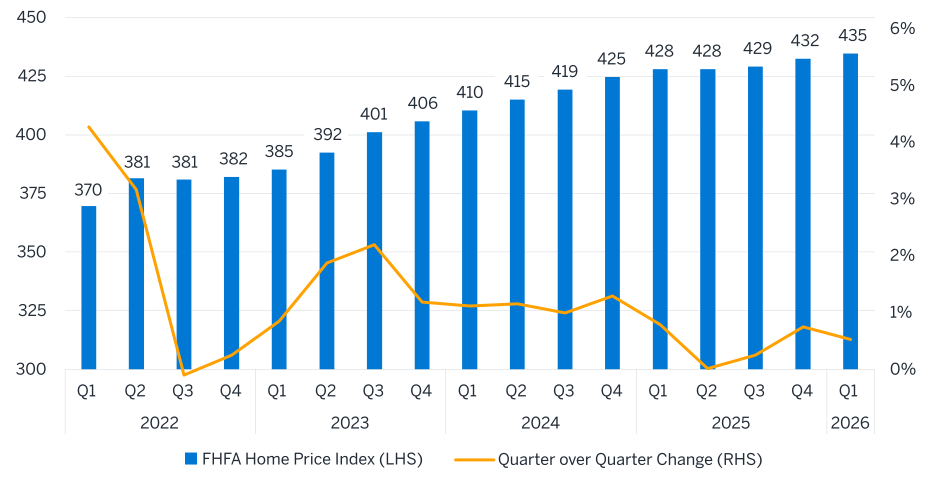
On an annual basis, home prices rose 1.6% in Q1 2026, the second quarter in a row of modest quarter-over-quarter growth after two quarters of no growth.
Figure 9: Federal housing and finance agency purchase-only home price index (base of 100 in Q1 1991)
Source: Moody's Analytics
1 Graphics for Economic News Releases. (n.d.). Civilian unemployment rate. U.S. Bureau of Labor Statistics. Retrieved June 25, 2026, from https://www.bls.gov/charts/employment-situation/civilian-unemployment-rate.htm.
2 Center for Microeconomic Data. (2026, Q1). Household debt and credit report. Federal Reserve Bank of New York. Retrieved on June 25, 2026, from https://www.newyorkfed.org/microeconomics/hhdc.html.
3 Trading Economics. (n.d.). United States Michigan 5-year inflation expectations. Retrieved June 26, 2026, from https://tradingeconomics.com/united-states/michigan-5-year-inflation-expectations.