It’s no secret that the pharmaceutical supply chain is complex. Many stakeholders are involved from the point the product is manufactured until it is dispensed at the pharmacy counter. Each stakeholder operates from a different perspective, with unique considerations and incentives. Together, each of their decisions impact the whole the supply chain. It is essential for life science companies to have an understanding of how stakeholders operate and interact, in order to effectively make decisions that consider impacts across the supply chain. The following brief provides this foundational knowledge by outlining the roles and key focus areas for the six major stakeholders in the pharmacy supply chain.
Across all stakeholders, two focus areas are consistently at the top:
- Gross-to-net revenue optimization: This metric, including accounting for patient affordability, enables life sciences companies to manage rebates, discounts, benefit designs, and patient assistance programs in a way that maintains profitability and competitiveness, and when executed thoughtfully this translates into lower out-of-pocket (OOP) costs for patients.
- Policy compliance: Navigating federal and state pharmacy-focused policies and programs, such as the Medicare Drug Price Negotiation Program,1 among many others, which have many downstream impacts on pharmacy contracting, utilization, and revenue streams.
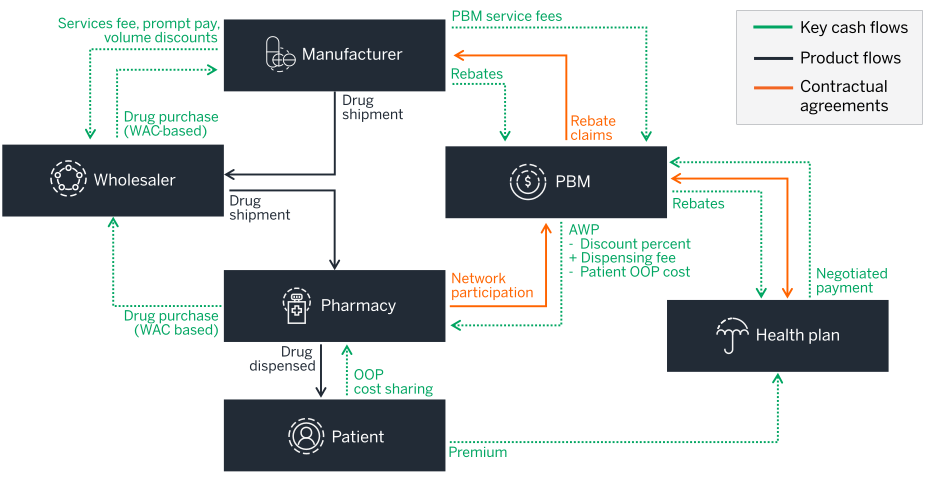
Figure 1 illustrates six major stakeholders, and the flow of pharmacy products and funds for a single-source, brand-name product purchased at a retail pharmacy.
Figure 1: Major stakeholders and interactions of pharmacy supply chain
1. Manufacturer participation in the pharmacy supply chain
Manufacturers drive research and development of brand-name and generic pharmaceutical products. They run clinical trials, secure approval from the U.S. Food and Drug Administration, scale production, and supply wholesalers. Brand-name products are generally sold to wholesalers for distribution using wholesale acquisition cost (WAC) as the list price before any negotiated adjustments. Generic manufacturers may bypass the wholesaler. Health plans use formularies to manage utilization of pharmaceutical products. In order to secure preferred formulary placement, manufacturers often offer rebates for brand-name products, which are paid to pharmacy benefit managers (PBMs) and may be shared with the associated health plans.
Some key focus areas for manufacturers include:
- Establishing and maintaining patient access to therapy and ensuring patient affordability through formulary coverage and patient assistance programs for high-cost drugs.
- Structuring and negotiating PBM contracts within an environment of increasing rebate transparency and reduced rebate leverage under the Medicare Drug Price Negotiation Program. PBMs may try to recoup margin through higher rebates in the commercial market or through other fees
2. Wholesaler participation in the pharmacy supply chain
A wholesaler purchases pharmaceutical products from manufacturers and resells them to pharmacies. They serve as a financial intermediary between manufacturers and pharmacies that cannot afford to stock every product, especially those that are high cost, yet need to fill prescriptions. Wholesalers generally pay the manufacturer a discount off WAC, secured through distribution fees and bulk purchasing discounts. On the sell side, pharmacies purchase products from wholesalers based on WAC with a negotiated markup. There are a variety of contracting structures pharmacies use when purchasing from wholesalers. Some examples include joining group purchasing organizations (GPOs) to increase negotiating leverage or performance-based contracts with financial incentives tied to service levels, such as product availability, on-time delivery, and order accuracy.
Some key focus areas for wholesalers include:
- Supporting and extending credit to independent pharmacies as reimbursement cycles change under Medicare price negotiation
- Developing value-added services to compete with vertically integrated payers and PBMs, and direct-to-pharmacy distribution models
3. Pharmacy benefit manager (PBM) participation in the pharmacy supply chain
A PBM manages prescription drug benefits and processes pharmacy claims on behalf of health plans, employers, or government programs. A core function of PBMs is to establish a formulary outlining the list of pharmaceutical products covered under their clients’ health insurance. A typical formulary has several tiers with different cost sharing to encourage patients to use lower-cost products. PBMs also negotiate price concessions in the form of rebates with manufacturers to place products on preferred formulary tiers. The PBM may share all or a portion of the rebates with their health plan clients. When a prescription is dispensed, the PBM adjudicates the claim, pays the pharmacy a negotiated rate, and is reimbursed by the health plan client at a separately negotiated amount.
Some key focus areas for PBMs include:
- Designing formularies that preserve patient access to needed therapies while also helping health plan clients manage pharmacy benefit costs
- Meeting expanding federal and state requirements for drug price and rebate transparency. For example, some PBMs have made announcements that they will move all rebates to the point of sale at the pharmacy2
4. Pharmacy participation in the pharmacy supply chain
A pharmacy is the intermediary between the wholesalers, PBMs, and patients. Patients receive pharmaceutical products at a pharmacy, either at a physical retail store or through an online/mail-order service. Pharmacies purchase products from wholesalers at contracted rates based on WAC and receive the required member cost sharing for the product from the patient at the point of sale. While a provider writes the prescription, a pharmacy is often the only stakeholder that helps patients understand their options to make products more affordable, whether through the patient’s health insurance plan or through manufacturer patient assistance programs. Pharmacies are reimbursed by PBMs based on negotiated rates, which start with the Average Wholesale Price (AWP) and dispensing fees less negotiated discounts and member cost sharing.
A pharmacy’s key focus areas include:
- Getting patients on therapy and promoting adherence to treatment plans to meet service-level agreements, which are often based on time to fill a script and / or adherence levels
- Assisting patients with understanding their prescription drug coverage and options to make OOP costs affordable
- Maximizing purchasing power and negotiated arrangements with wholesalers
5. Health plan participation in the pharmacy supply chain
A health plan provides medical and/or prescription drug insurance to individuals in exchange for member premiums. A health plan is usually a health insurance company but may also be an employer in the case of self-funded group coverage. Health plans contract with PBMs to administer pharmacy benefits, including formulary coverage, pharmacy reimbursements, and manufacturer rebate claims. Health plans are responsible for the net balance of the pharmaceutical product cost after patient cost sharing, which they pay to the PBM. Health plans often receive a portion of manufacturer rebates from the PBM, which they use to reduce member premiums.
A health plan’s key focus areas include:
- Maintaining positive member experiences by ensuring that patients are getting on therapy and continuing with their treatment plans to ensure conditions do not worsen over time
- Managing plan liability to maintain competitive member premiums amidst high pharmacy spending trends through various formulary controls and by maximizing rebate payments from PBMs for high-cost drugs
6. Patient participation in the pharmacy supply chain
A patient is an individual who receives a prescription from a healthcare provider and obtains the pharmaceutical product from a pharmacy. Patients are responsible for paying member premiums to their health plan and the OOP cost at the point of sale at the pharmacy.
A patient’s primary focus includes:
- Being able to receive their required pharmaceutical products in a timely manner from their preferred pharmacy
- Understanding options to make their pharmaceutical products more affordable, whether finding a health plan where their products are covered on a preferred tier or through a patient assistance program/other manufacturer support program
Why life sciences companies should understand the stakeholders of the pharmacy supply chain
For an organization engaging with a stakeholder in the pharmacy supply chain, the impacts of a particular strategic decision are not always immediately clear. As pharmacy-focused policies and programs continue to evolve, the pharmacy supply chain may also change for certain products. Therefore, it is necessary for life science companies to understand the related parties of the engaged stakeholders and their interactions within the pharmacy supply chain to optimize strategic decision-making.
1 Medicare Drug Price Negotiation Program. CMS. Retrieved December 18, 2025 from https://www.cms.gov/priorities/medicare-prescription-drug-affordability/overview/medicare-drug-price-negotiation-program.
2 Roy, S. Cigna ends drug rebates in some types of health plans. (October 27, 2025). Reuters. Retrieved December 18, 2025 from https://www.reuters.com/business/healthcare-pharmaceuticals/cigna-will-end-drug-rebates-many-private-health-plans-2027-bloomberg-news-2025-10-27/.