This article summarizes the key financial results for medical professional liability (MPL) specialty writers from the third quarter of 2025, marking the 16th consecutive year that Medical Liability Monitor has tracked and published these results. As in prior years, it compares historical third-quarter financial results with full-year figures to provide insight into where 2025 annual results may be headed.
The analysis reflects the collective financial performance of a large group of insurers specializing in MPL coverage. It draws upon 20 years of aggregate statutory financial data compiled by S&P Global Market Intelligence. The current composite includes 170 MPL specialty companies that reported more than $8.3 billion in direct premium written in 2024.
Premium continues to grow
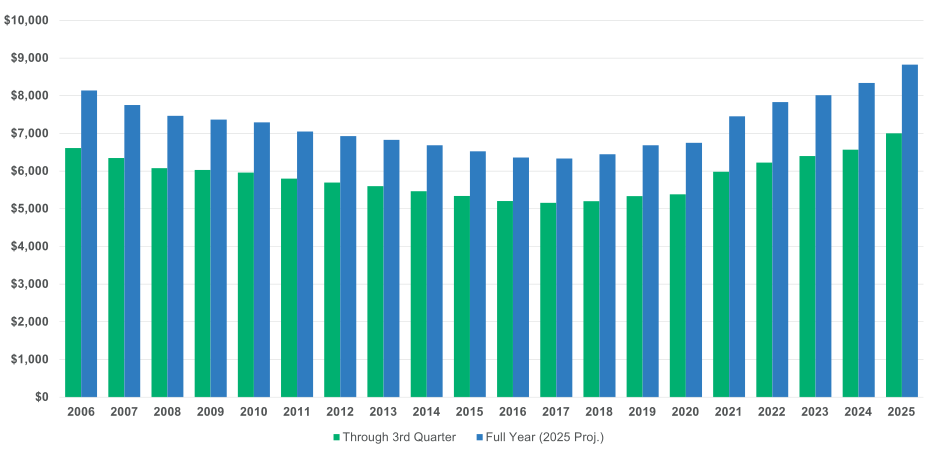
Consistent with the first half of the year, direct written premium for our composite continued to grow in the third quarter. As shown in Figure 1, this year marks the eighth consecutive year of third-quarter premium growth, resulting in the highest direct written premium on record. The composite’s direct written premium rose approximately 6.7% from the same period in 2024, the largest increase since 2021.
The full-year projection for 2025 anticipates that premium growth in the fourth quarter will align with trends seen in the second and third quarters. As Figure 1 shows, the projection is expected to reach its highest level in two decades, with direct written premium exceeding $8.8 billion.
Figure 1: Direct written premium — Q3 vs full year ($millions)
Investment yield improves
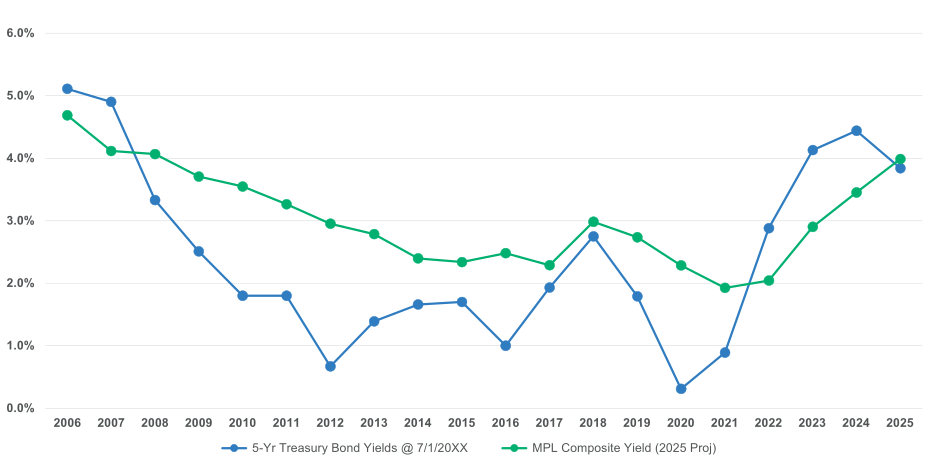
MPL companies enjoyed steadily improving investment yields over the past four years. As shown in Figure 2, our composite through the third quarter of 2025 recorded a 200 basis point increase in investment yield since 2021. Paired with a 60 basis point decrease in the 5-year Treasury bond yield over the past year, this has led to the composite outperforming treasury bonds for the first time in four years. As the Federal Reserve leaves the door open for future interest rate cuts, the potential for a prolonged decline in Treasury bond yields should be monitored, as the composite’s investment performance could suffer.
Figure 2: MPL composite yield vs five-year treasury bond yield
Investment income remains bullish
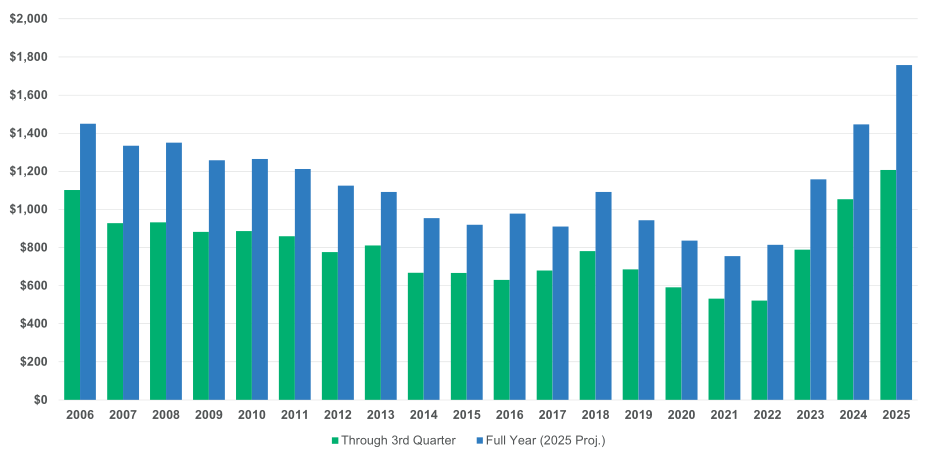
Our composite’s investment income continued to rise through the third quarter of 2025, surpassing $1.2 billion, as shown in Figure 3 (see page 7). This is more than 9% above the composite’s previous peak of $1.1 billion through the third quarter of 2006. Investment income more than doubled during the past three years, up from $522 million in the third quarter of 2022. Given the pace investment income has maintained, full-year 2025 investment income is projected to surpass $1.7 billion, which would mark the highest level on record.
Figure 3: Investment income - Q3 vs full year ($millions)
Indemnity payments soar
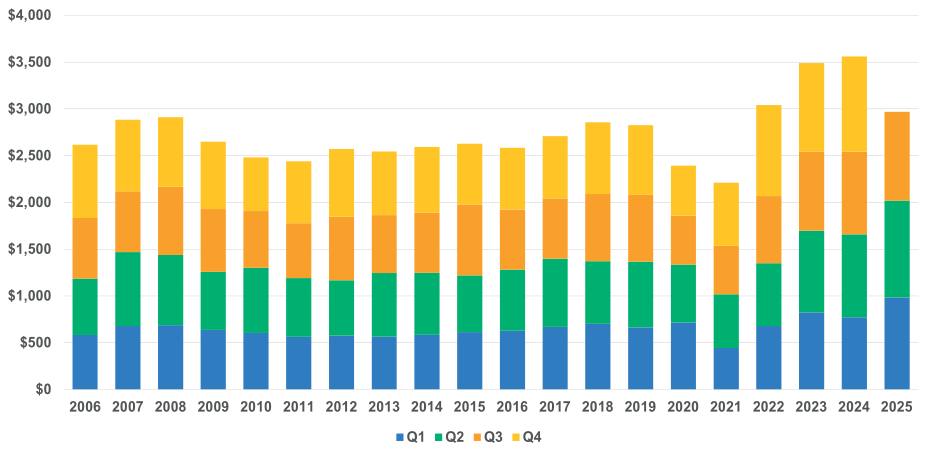
Indemnity payments for our composite continued to rise through the third quarter of 2025. As shown in Figure 4 (see page 7), payments remain well above any level seen in the past 20 years, reaching more than $2.9 billion through the first three quarters of 2025, an increase of almost 17%. While the payment surge in recent years was due in part to the backlog of claims created by COVID-19 court closures (more closed claims), the industry now faces the pressures of social inflation (higher costs per claim). Rising claim costs have emerged as a leading factor, with a steady increase in the severity of closed claims since 2021. In the past year, physicians claim severity has risen by over 10%, while claim frequency has remained relatively flat during the same period, according to data from the National Practitioner Data Bank Public Use File.1
The MPL industry should continue to monitor the range of risks that contribute to rising severity. Larger verdicts and settlements that translate into higher plaintiff demands will likely continue to affect our composite. In addition, inflation in healthcare costs, rising defense costs and shifts in judicial and legislative environments will continue to push claim costs upward.
Figure 4: MPL direct paid losses ($millions)
Surplus remains strong
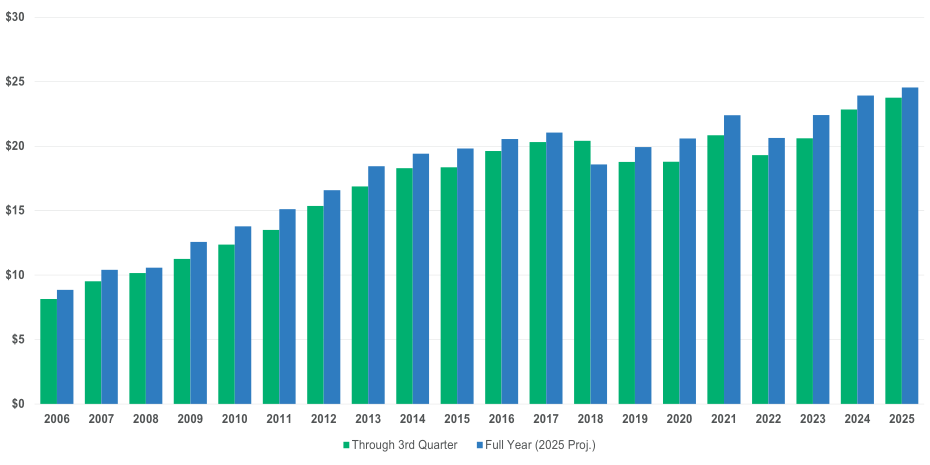
Our composite’s policyholder surplus increased by 4% year-over-year in the third quarter of 2025, as shown in Figure 5, reaching approximately $23.7 billion. This growth continues the pattern of policyholder surplus reaching record highs each quarter this year.
The composite’s full-year 2025 policyholder surplus is projected to close at over $24 billion. The increase is driven by the combination of higher premiums collected from policyholders, as illustrated in Figure 1, and the strong increase in investment income as shown in Figure 3. Together, these factors have outpaced the increases in indemnity payments (and correlated reserve-related changes) noted in Figure 4 and lead the composite’s projected fullyear policyholder surplus to a new high.
Figure 5: Policyholders surplus - Q3 vs full year ($billions)
Conclusion
The third quarter of 2025 reflects many of the trends seen throughout the past year for our composite: continued premium growth and rising investment returns despite increasing claim costs. The composite is seeking rate increases to counter the inflationary pressures driving higher indemnity payments. Improving investment yields have offset these pressures so far but will need close monitoring given the uncertain economic outlook.
As we enter the final quarter of 2025, we will see how the composite addresses the growing risk of social inflation while evaluating future pricing and claims strategies.
The previous edition of this series can be read here, and the next quarter's edition can be found here.
Eric Wunder is a principal and consulting actuary, and Courtney Pileggi is an associate actuary, at Milliman Inc., an independent actuarial and consulting firm.
This article first appeared in the December 2025 issue of Medical Liability Monitor: http://www.medicalliabilitymonitor.com/.
1 National Practitioner Data Bank Public Use File, June 30, 2025, U.S. Department of Health and Human Services, Health Resources and Services Administration, Bureau of Health Professions, Division of Practitioner Data Banks.