Dear Relieved:
Congratulations on your plan’s funding level! A well-funded plan is certainly a nice achievement, but it does come with some new challenges—namely, higher contribution volatility. (I am assuming your plan doesn’t use a fixed contribution rate. If it does, this article will be mostly theoretical, but do reach out to your actuary as that fixed contribution rate can likely use an adjustment now that the plan is fully funded.)
How a pension plan’s contributions are calculated—and what causes unexpected changes
Let’s start with some background on the calculation of a plan’s actuarially determined contribution (ADC). The two main components are the normal cost, which is the value of benefits being accrued during the year, and the past service cost, which pays off any unfunded accrued liability over time (like a mortgage payment). We usually also include an interest adjustment to account for the time between the valuation date and the contribution being made.
Now that we have laid out the mechanics of how the contribution is calculated, let’s examine why the contribution might change significantly from one year to the next. Pension contributions are driven by two key inputs—the plan’s underlying liabilities and assets. Whenever either of these items changes unexpectedly, the ADC may also change significantly.
Liabilities can change when the plan population changes in ways that are different from what we assumed. For example, an increase in disability retirements, or higher-than-expected pay raises or cost of living adjustments, could all result in significant liability losses. An assumption change, such as a new mortality table with higher life expectancy can also push liabilities to be higher than planned. Still, it is unlikely that liability losses would be more than 3% or 4% in any one year. In other words, a bad year on the liability side would be something like a 5% loss.
The plan’s assets are quite a different story. As investors know, there will certainly be years with negative returns, and it is not unheard of for assets to return -15% in a single year. And if your assumption is a 6.5% return, that -15% return translates to a loss of over 20%! We do have asset-smoothing techniques that dampen this volatility, but a large asset loss will still result in an unexpected increase in the contribution amount.
The impact of market swings on pension plans with different funding levels
So, a plan’s investments are the much more likely source of a big jump in the annual contribution. But why does the plan’s funded status matter when it comes to the impact of market swings? Wouldn’t all plans be hurt by a year of poor returns?
Consider three plans that are identical, except that one plan is poorly funded, one plan is slightly less than 100% funded, and one plan is overfunded. Figure 1 lays out the pieces of the ADC for these three plans.
Figure 1: Contributions for three sample plans
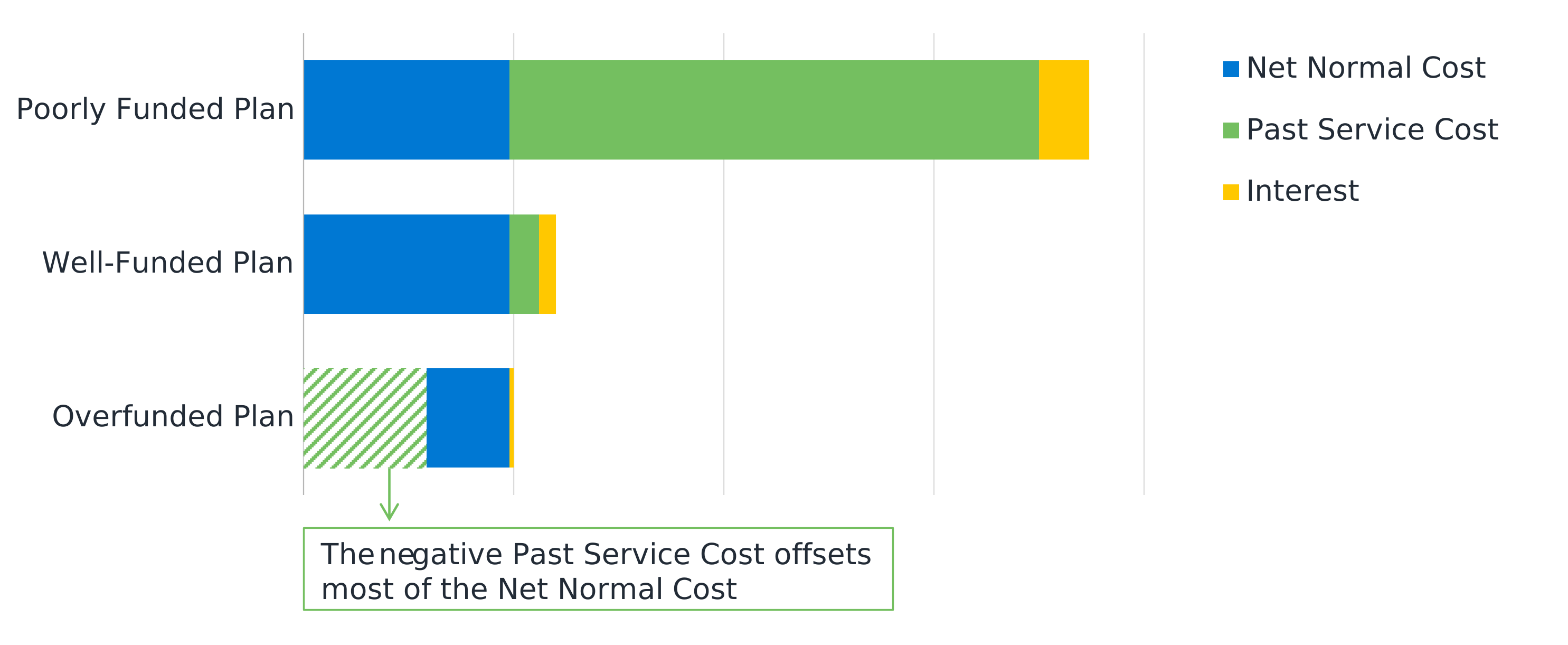
The net normal cost is the same for all three plans, while the past service cost varies significantly based on the funded level of each plan. For the poorly funded plan, the past service cost is by far the largest portion of the contribution. For the well-funded plan, the past service cost is a small part of the contribution. And for the overfunded plan, the past service cost is negative and actually offsets part of the normal cost.
What if the assets went down by 10% for these three plans? All three contributions would go up, but the increase would be larger for a well-funded or overfunded plan. That is because a plan with more assets has more to lose! In actuarial terms, it is exposed to more investment risk. The same percentage loss results in a higher dollar loss than for a plan with fewer assets.
Figure 2: Impact of 10% decrease in the assets on the contribution*
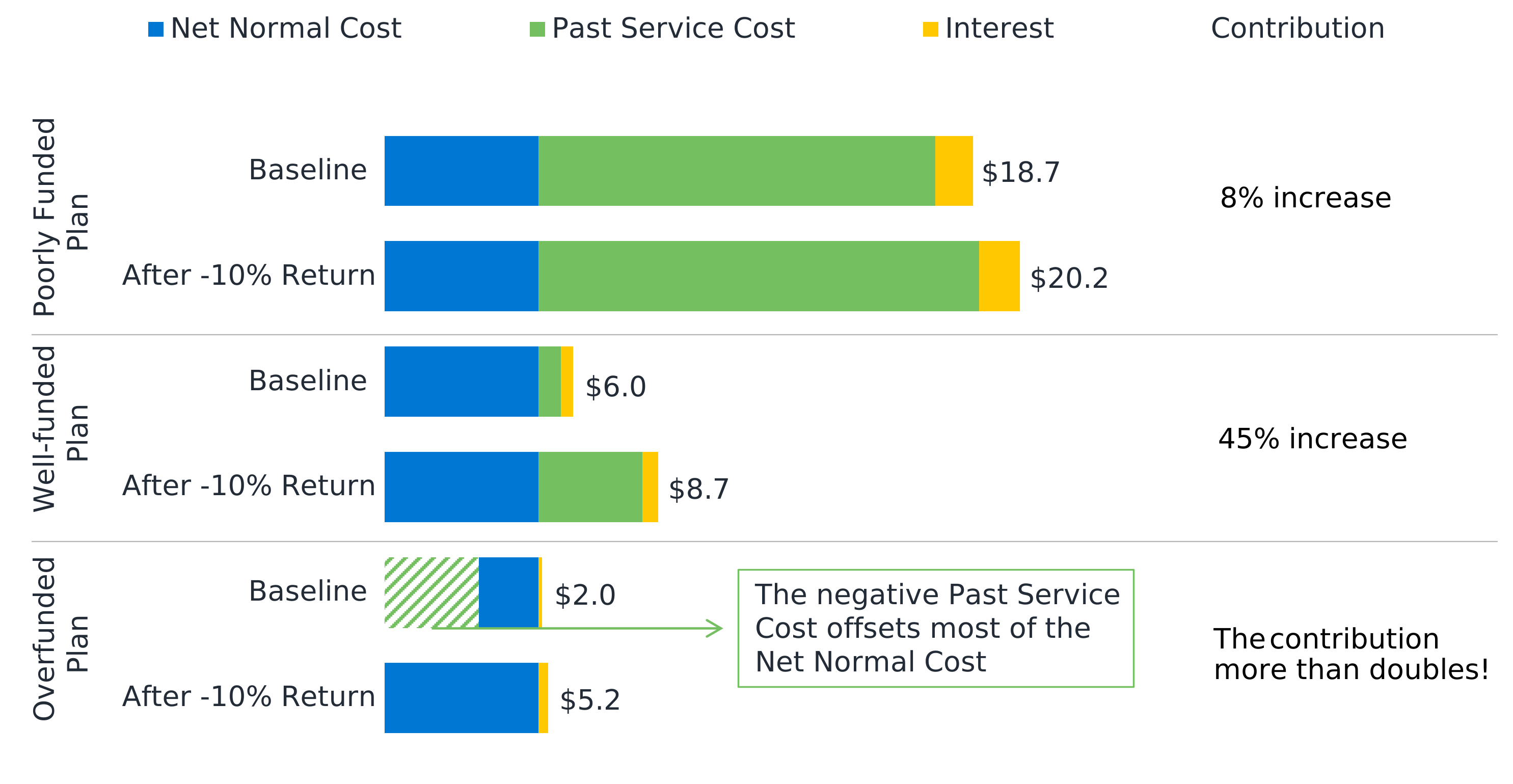
*Results for a hypothetical plan based on a 6.7% interest rate, 20-year amortization period, and 2.0% amortization growth rate. The impact for an actual plan will vary based on the plan’s funding policy and actuarial assumptions.
For the poorly funded plan, the big asset loss makes the already large past service cost even larger. But because the assets are relatively small compared to the liability, even this significant asset loss only increases contribution by 8%. Of course, an 8% increase is still not welcome news. For the well-funded plan, what had been a small amount of underfunding now becomes a much bigger amount—the past service cost increases significantly and therefore so does the contribution. The result is a 45% increase! But look at the disaster for the overfunded plan. The asset loss was big enough that the plan dropped from more than 100% funded to under 100%. Instead of having a negative past service cost to offset part of the net normal cost, the contribution now reflects the full net normal cost plus a past service cost, so from one year to the next, the contribution more than doubled. Ouch!
But I don’t want to alarm you. There will be years with better-than-expected asset returns, too, which will lead to a drop in the contribution. And while a big drop in the contribution may be easier to handle than a big increase, big changes still mean there is volatility, and any kind of volatility is an issue for governmental plans.
Options for a well-funded pension plan to manage investment volatility
Moreover, there are several approaches you can consider to help manage this volatility. Your plan likely already takes steps to prevent large swings in the contribution—things like maintaining a well-diversified asset mix, using asset smoothing, and amortizing the unfunded liability over a number of years. These measures help, but there are some other ideas that will take your funding policy a step further, especially when your plan is well funded.
The first idea is to build up a funding cushion. In other words, let your plan get slightly overfunded. In practice, this means setting a funding policy where you don’t use a negative past service cost to offset the normal cost unless the plan reaches a funding level somewhere above 100%, such as 110% or 115%. This way, you are building up a small surplus that can serve as a cushion in those bad years. This may mean that you will contribute more than you would otherwise in some years, but if your goal is to smooth out the contribution level, the cushion will help.
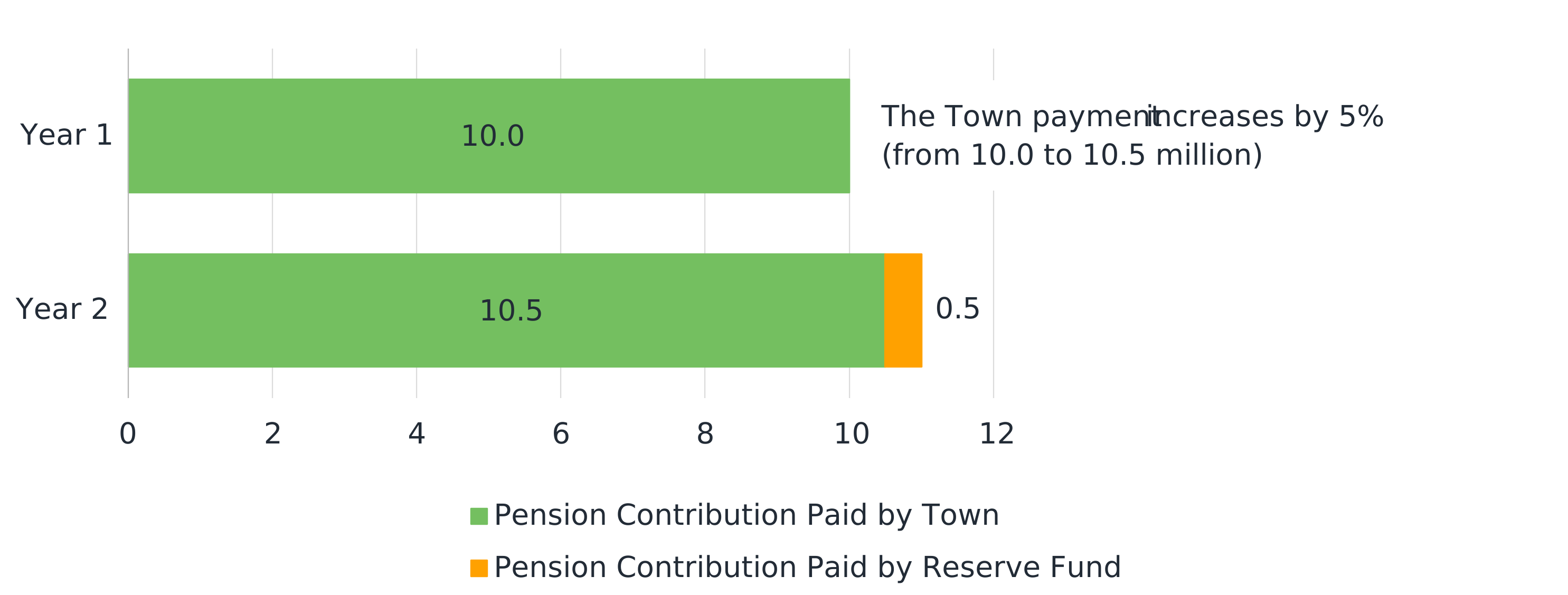
Another possible approach is to establish a pension reserve fund. This fund would not be a pension asset, but would be set up as part of the general fund with the purpose of acting as that cushion in years when the contribution increases significantly. Governmental employers often use reserve funds to manage budget volatility in areas like healthcare costs, workers’ compensation, and other self-insured risks; the idea can be used for pension costs as well. You would then set a policy for when the pension reserve gets used, such as when the contribution increases more than 5%. In that situation, the operating budget payment would go up by 5%, and the rest would come from the pension reserve. The pension reserve can also be replenished when market returns are strong. For example, if the ADC goes down from one year to the next, the plan sponsor could budget a contribution equal to the prior year’s ADC and deposit the excess to the pension reserve. One benefit of this approach is that funds can be withdrawn from the reserve for something other than pension contributions, and you could set a policy for when that can occur, for example, if the plan becomes significantly overfunded.
Figure 3: Reserve fund example
You may also want to look at the basic features of your amortization policy. Recall that unfunded liability that you are paying off like a mortgage. There are different ways to structure the payoff schedule. (Check out this past column for descriptions of the “mortgage” options and how they work.) Is the mortgage type you have now the most appropriate? For a well-funded plan, a 15-year layered base approach with no payment growth built in often minimizes volatility. In mortgage terms, this would be like taking out an initial mortgage for the current underfunding and then taking out smaller annual loans for any new gains or losses, with all the loans having a fixed payment amount and a 15-year payment period. (Note that in the years that you have a gain, the “loan” is negative.)
Figure 4: 15-year layered amortization bases*
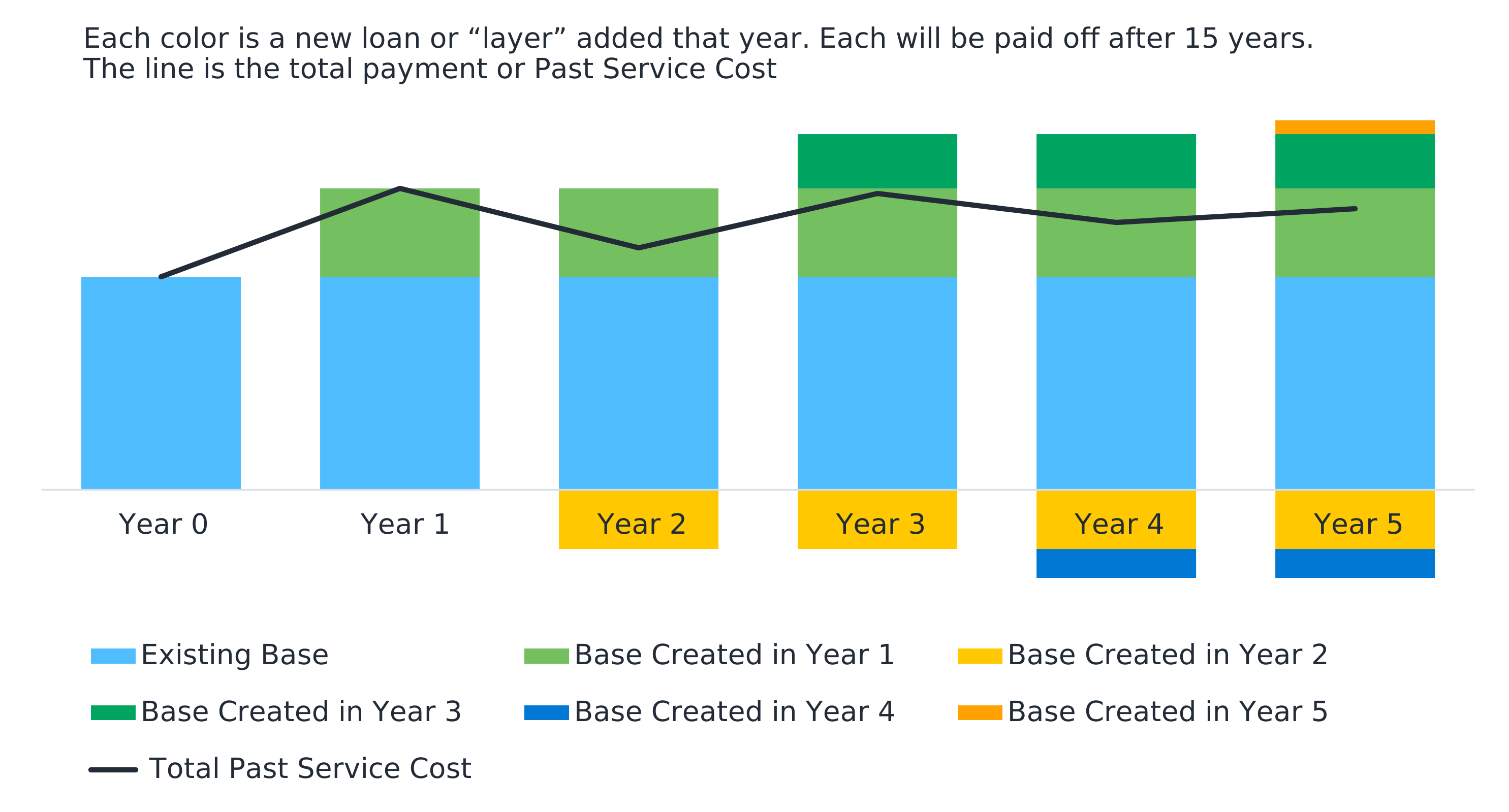
*Level dollar amortization payments shown.
There are also more fancy options, such as a risk-based funding policy and contribution smoothing, but I will leave those for a discussion with your actuary.
If you are interested in learning more or modeling various plan funding policy approaches for your community, reach out to your actuary.
This edition of Dear Actuary was written by Yelena Pelletier, ASA.
For more Dear Actuary articles, see prior letters here.