This edition of our trend series builds upon prior Milliman research demonstrating rapidly rising Part D trends, largely concentrated in the non-low income (NLI) population, incorporating data through Q3 2025.
Key findings
The allowed per member per month (PMPM) trend for NLI members continues to exceed low income (LI) trend.
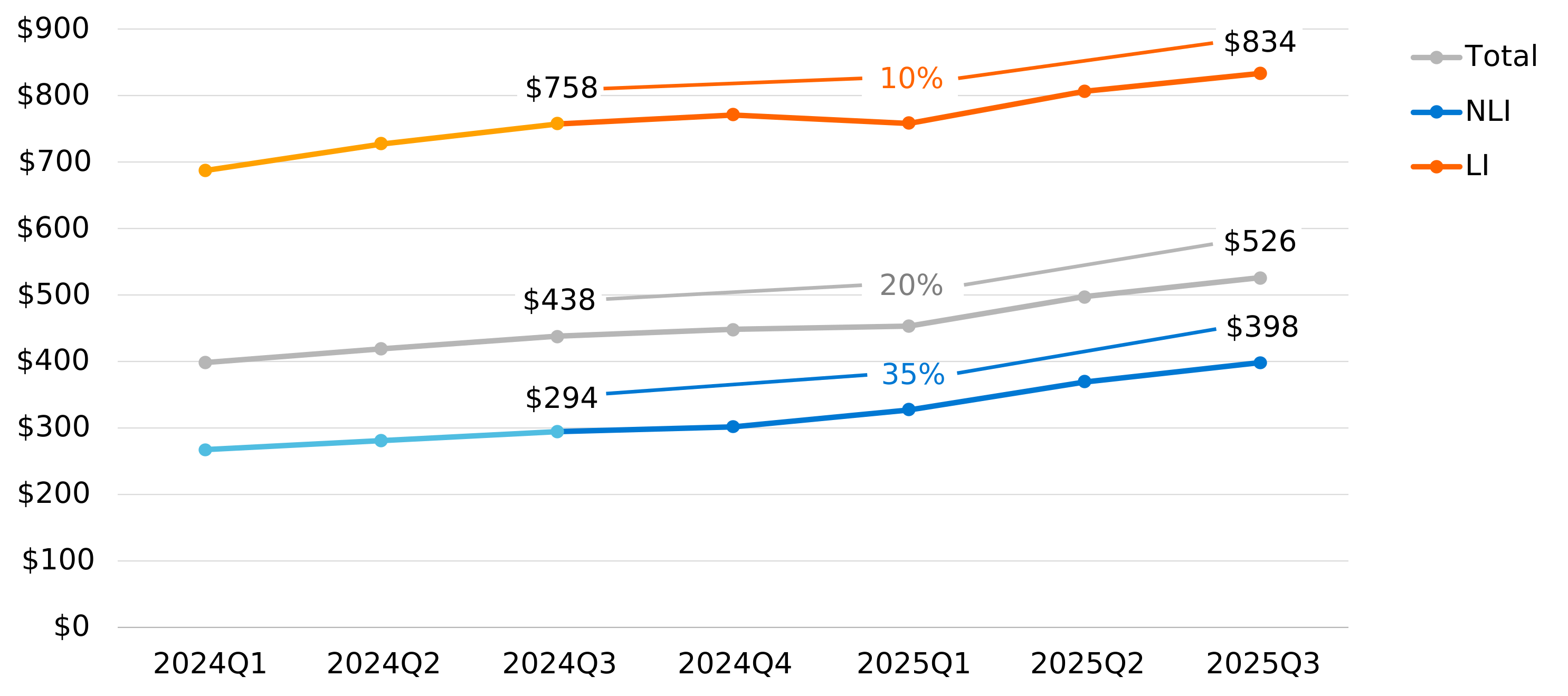
Between Q3 2024 and Q3 2025, total drug costs PMPM in the individual Part D market increased by 20%. Consistent with prior research, the large recent trends are driven by growth in NLI costs, which grew 35% between Q3 2024 and Q3 2025, compared to a 10% increase for the LI population over the same time period, with the largest gap in growth continuing to be among specialty drugs.
Figure 1 shows the total gross drug costs PMPM by quarter from the first quarter of 2024 through the third quarter of 2025, highlighting the total change from Q3 2024 to Q3 2025 described previously.
Figure 1: Individual Medicare Part D gross cost PMPM trends
Specialty costs are still growing, but trends decelerate in Q3 2025.
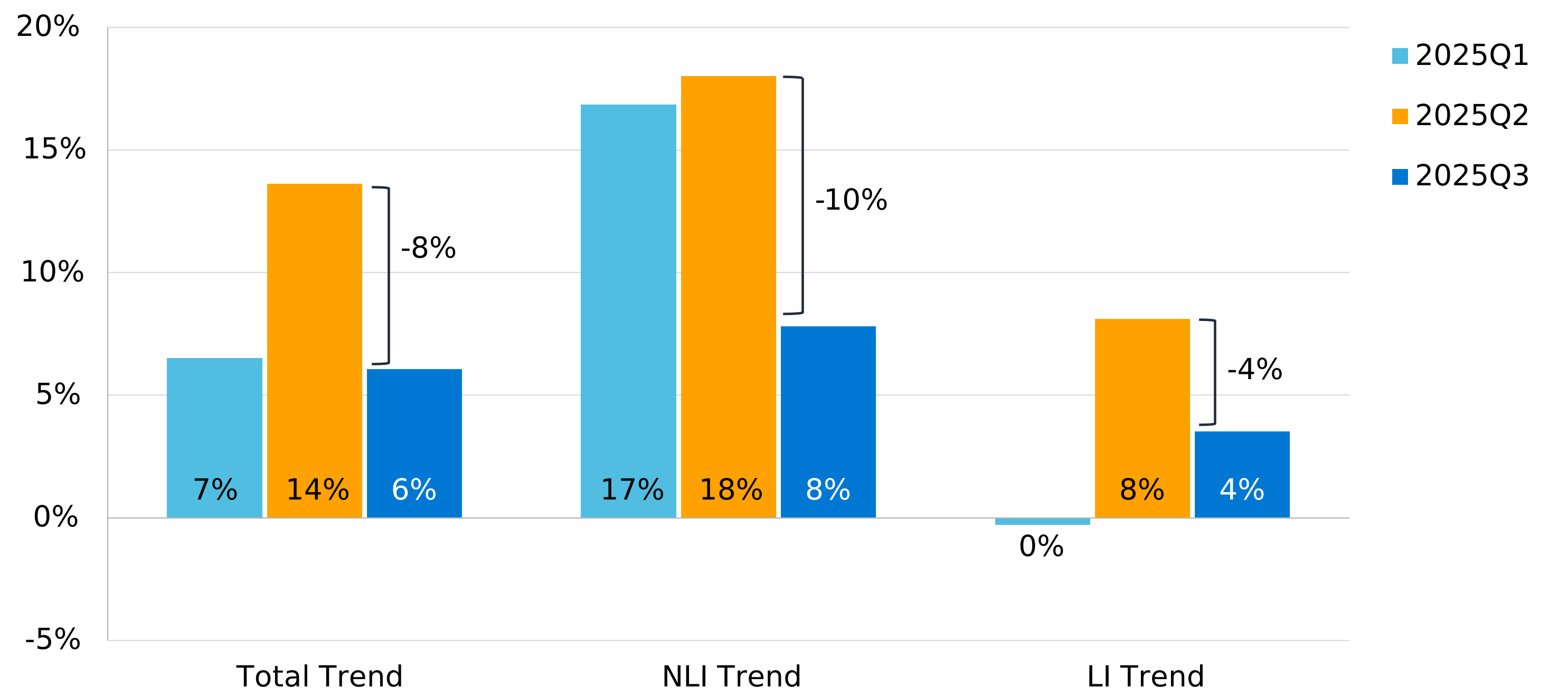
As described previously, NLI specialty drug trends have been the primary driver of the overall trends we observe from 2024 through Q3 2025. NLI specialty drug costs increased 17% between Q4 2024 and Q1 2025 and then another 18% between Q1 2025 and Q2 2025. While costs are still increasing rapidly, the magnitude of quarterly trends declined between Q2 2025 and Q3 2025, showing an 8% increase in NLI specialty costs.
Figure 2 shows the specialty gross drug cost trends by quarter for the first three quarters of 2025.
Figure 2: Individual Medicare Part D specialty gross cost PMPM trend by income status, relative to prior quarter
GLP-1s continue to grow, with notable shifts between products from 2024 to 2025.
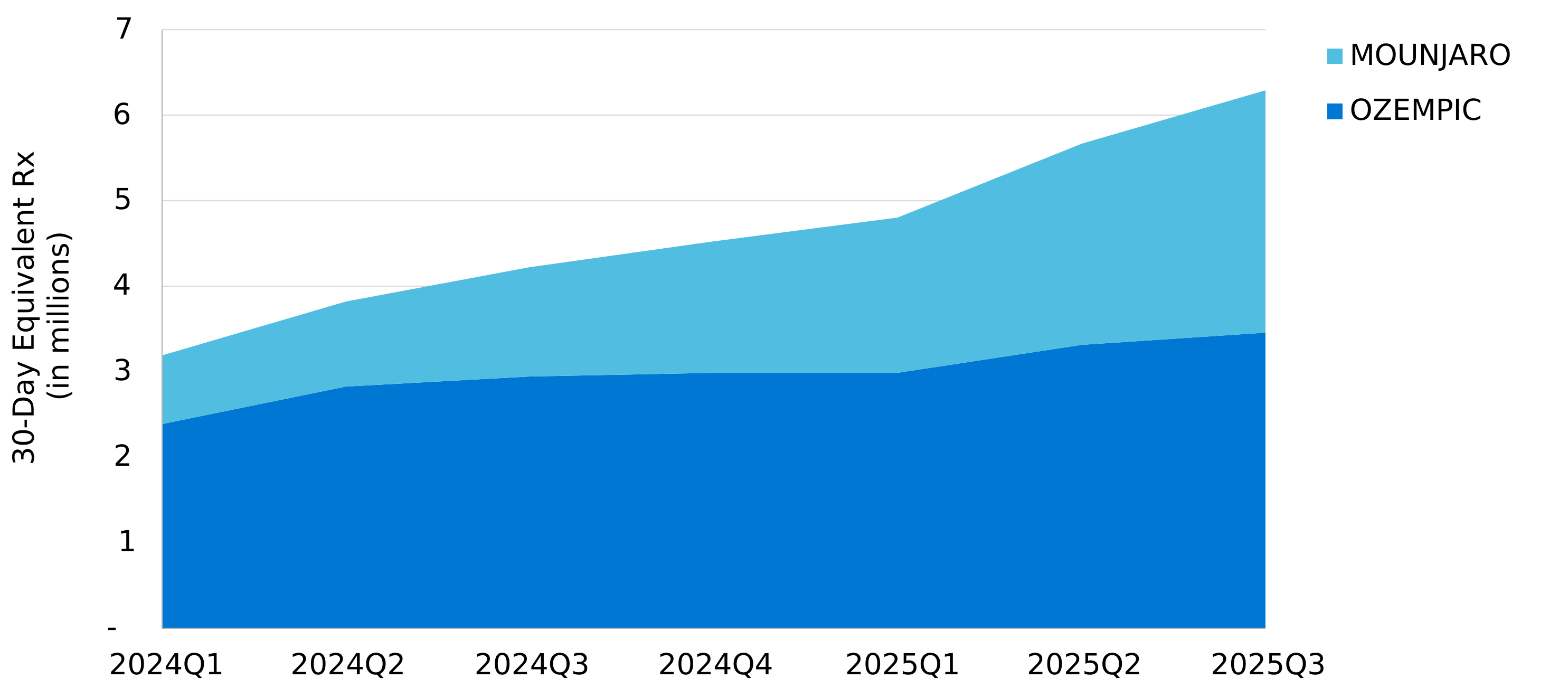
Utilization of both Ozempic and Mounjaro has continued growing through Q3 2025, nearly doubling from 3 million combined scripts in Q1 2024 to more than 6 million in Q3 2025, signaling robust demand. These two drugs comprise more than $20 billion, or 8%, of total Part D costs in 2025 through Q3. While Ozempic still maintains the majority of market share between the two drugs, this may change in the coming months given Mounjaro’s utilization growth rate during 2025 has far outpaced Ozempic’s. Figure 3 shows the growth of these two drugs in the individual Part D market from Q1 2024 to Q3 2025.
Figure 3: Individual Part D Ozempic and Mounjaro utilization
Immunology biosimilars capture meaningful market share in 2025.
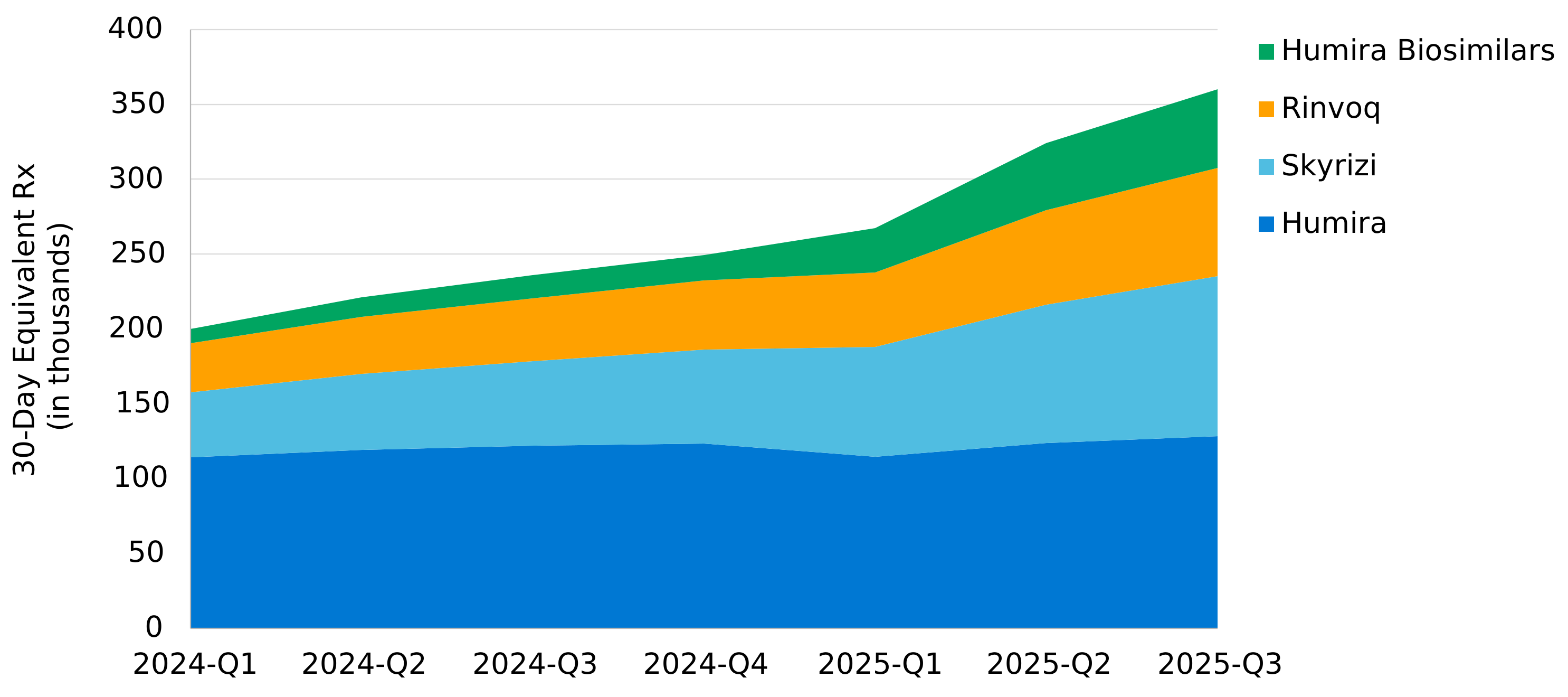
Humira biosimilars launched in 2023, but 2025 is the first year with meaningful utilization as formulary access expanded across the Part D market. The distribution of utilization between Humira and its biosimilars rose from 6% biosimilar utilization in Q1 2024 (one year after the first biosimilar launch) to 26% biosimilar utilization in Q3 2025, reflecting increased adoption. During this period, brand Humira utilization grew modestly by 12%, while AbbVie’s other immunology products, Skyrizi and Rinvoq, experienced utilization increases of more than 100%.
Figure 4 shows growth in utilization and the shift in market shares for key immunology products from Q1 2024 through Q3 2025.
Figure 4: Individual Part D AbbVie immunology brands and Humira biosimilars utilization
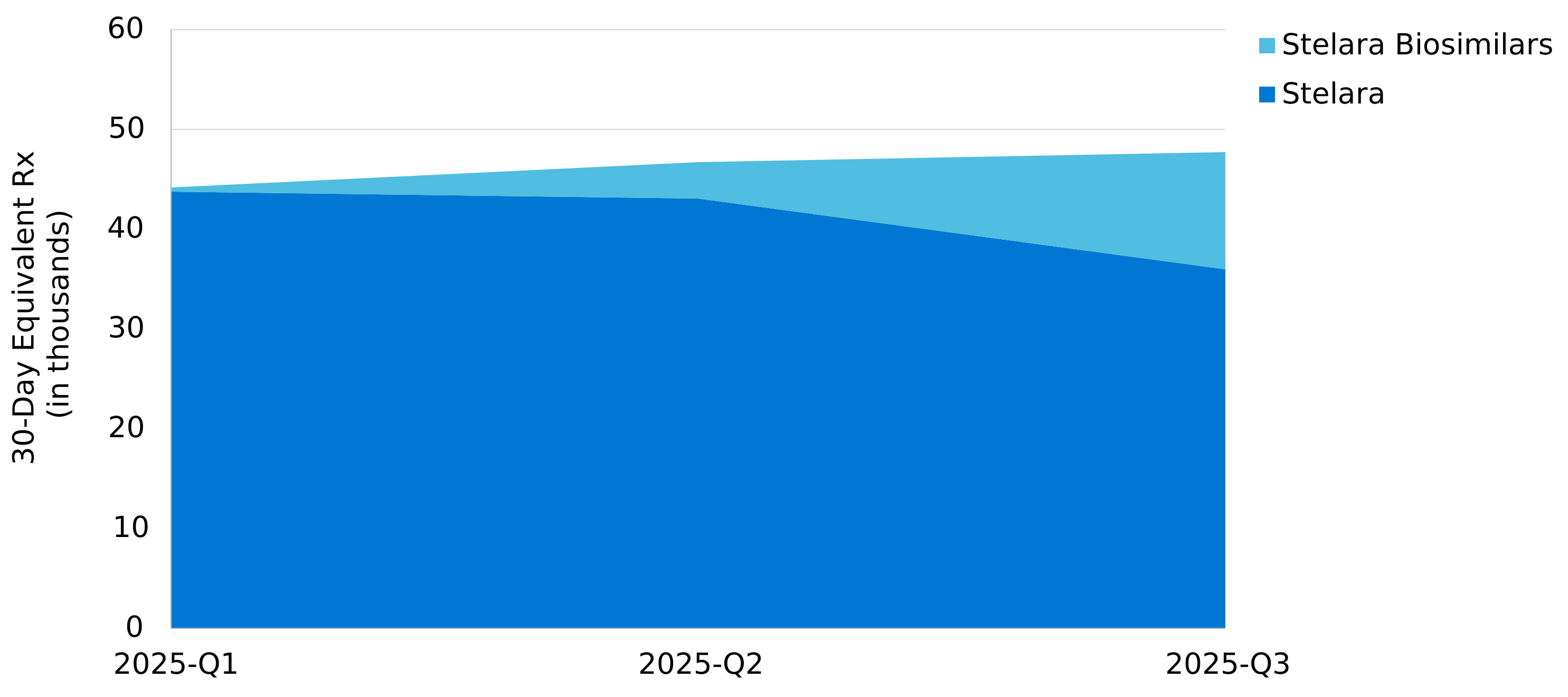
Stelara biosimilars launched in 2025 and have demonstrated consistent uptake over the course of the year. Stelara biosimilars are widely covered in the Part D market, which likely drove the quicker biosimilar adoption relative to Humira biosimilars. The distribution of utilization between Stelara and its biosimilars increases from 1% biosimilar utilization in Q1 (first quarter of launch) to 25% biosimilar utilization in Q3. While Humira grew its overall volume despite biosimilar entry, Stelara experienced a notable decline in utilization as biosimilars gained traction, with utilization decreasing 18% from Q1 2025 to Q3 2025.
Figure 5 shows the shift in market share between Stelara and its biosimilars in 2025.
Figure 5: Individual Part D Stelara and Stelara biosimilars utilization
2026 outlook
Rapidly rising Part D specialty costs have become a key area of focus for health plans and other Part D stakeholders in recent years as the Inflation Reduction Act (IRA) prompted new behaviors in patients and pharmaceutical manufacturers. Looking forward to 2026, we expect the following key drivers of upward and downward pressure on Part D gross costs:
- Initial price applicability year (IPAY) 2026 maximum fair prices (MFPs): These negotiated prices will directly reduce gross costs in Part D in 2026, though net plan costs may increase due to rebate tradeoffs.1 Based on 2025 drug mix, we expect this to decrease aggregate Part D gross costs by approximately 10%.
- GLP-1 anti-obesity drug coverage: The Trump administration previously announced Ozempic, Mounjaro, Wegovy, and Zepbound will have future prices of $245 per month in Medicare.2 In late December 2025, the Centers for Medicare and Medicaid Services (CMS) announced a voluntary demonstration model called Better Approaches to Lifestyle And Nutrition for Comprehensive hEalth (BALANCE), expanding Medicare coverage to anti-obesity medications (AOMs), which have historically been categorically excluded from Part D coverage.3 The model will be effective in 2027, and CMS also announced an interim bridge model in 2026. It is not yet clear how discounts will be effectuated in the interim bridge model and how Part D plans will be impacted, though CMS has stated, “The GLP-1 payment demonstration will operate outside of the Medicare Part D benefit’s coverage and payment flow, which means that Part D Plan Sponsors will not carry risk for eligible GLP-1 products furnished under the demonstration.”4
- List price decreases: In recent years, list price (i.e., wholesale acquisition costs [WAC]) reductions for high-volume products such as insulins (e.g., NovoLog and Humalog) and inhalers (e.g., Advair Diskus/HFA, Symbicort) have incrementally reduced Part D gross costs. These WAC decreases were likely in response to the average manufacturer price (AMP) cap removal in 2024, in addition to other forces at play. Additional list price decreases went into effect on January 1, 2026, for Farxiga, Eliquis, Linzess, Jardiance, Synjardy, Fiasp, and Imbruvica—most of which are selected drugs with MFPs in 2026 and/or 2027.5 Given the mounting drug pricing pressure from multiple directions—e.g., AMP cap removal, MFP, Most Favored Nation, inflationary rebates (Guarding U.S. Medicare Against Rising Drug Cost [GUARD]), and general political pressure—we expect to see additional WAC reductions in 2026, which would incrementally decrease Part D gross costs.
- Medicare Prescription Payment Plan (M3P): Very few Part D beneficiaries have leveraged the M3P so far—0.6% of all Medicare Part D beneficiaries. While the number of beneficiaries who would actually benefit from M3P—NLI beneficiaries filling specialty drugs—is a smaller cohort, only 6.7% of these beneficiaries elected to leverage the M3P.6 While M3P does not directly affect gross costs, using this option is likely to increase new therapy starts if this program relieves some financial burden associated with initial fills by spreading costs more evenly throughout the year. As more beneficiaries become familiar with the program, and if CMS proposals for point of service (POS) enrollment are enacted in the future, M3P election could ramp up, which in turn would likely incrementally increase Part D costs.
- Additional patient assistance program (PAP) eligibility changes: Research from earlier this year cited new pharmaceutical manufacturer requirements that patients must enroll in M3P to also enroll in their PAP,7 or other adjustments to PAP eligibility. These manufacturer-driven changes may partially explain the significant spikes in year-over-year utilization for particular drugs. We expect additional manufacturers will make similar changes for 2026, given patients in Part D now have much lower out-of-pocket exposure and may not require as much cost-sharing assistance as in prior years. Of note, Novo Nordisk already ended its Ozempic PAP for Medicare beneficiaries effective in 2026.8
Data and methodology
Milliman Medicare Market Intelligence (MedIntel) provided the data underpinning this white paper. The MedIntel platform is built upon CMS’s 100% Research Identifiable Files (RIF), highly enriched with supplementary data assets, and curated to address the needs of all Medicare stakeholders (plan sponsors, pharmacy benefit managers, manufacturers, providers, and others). Data is refreshed with as little as two weeks of lag, offering MedIntel subscribers near-real-time insights to support their business needs. We relied on RIF data from January 2024 through September 2025, including claim costs from 100% of beneficiaries enrolled in individual Medicare Part D plans, excluding those enrolled in certain unique plans, such as the Program of All-Inclusive Care for the Elderly (PACE) and Limited Income Newly Eligible Transition (LI NET) Program. For more information, contact your Milliman consultant.
Qualifications
Guidelines issued by the American Academy of Actuaries require actuaries to include their professional qualifications in all actuarial communications. The authors are members of the American Academy of Actuaries and meet the qualification standards for rendering the actuarial opinions contained herein.
1 Holcomb, K., Feller, M., Klaisner, J., Carioto, J., & Dieguez, G. (September 5, 2024). Medicare price negotiation: Anchored drug prices in uncharted waters. Milliman. Retrieved January 7, 2026, from https://www.milliman.com/en/insight/medicare-price-negotiation-anchored-drug-prices.
2 The White House. (November 6, 2025). Fact sheet: President Donald J. Trump announces major developments in bringing most-favored-nation pricing to American patients. Retrieved January 7, 2026, from https://www.whitehouse.gov/fact-sheets/2025/11/fact-sheet-president-donald-j-trump-announces-major-developments-in-bringing-most-favored-nation-pricing-to-american-patients/.
3 Centers for Medicare and Medicaid Services. (December 23, 2025). CMS launches voluntary model to expand access to life-changing medicines, promote healthier living [Press release]. Retrieved January 7, 2026, from https://www.cms.gov/newsroom/press-releases/cms-launches-voluntary-model-expand-access-life-changing-medicines-promote-healthier-living.
4 Centers for Medicare and Medicaid Services. (December 29, 2025). BALANCE (Better Approaches to Lifestyle and Nutrition for Comprehensive hEalth) model. Retrieved January 7, 2026, from https://www.cms.gov/priorities/innovation/innovation-models/balance.
5 National Community Pharmacists Association. (November 11, 2025). WAC reductions likely coming soon [Press release]. Retrieved January 7, 2026, from https://ncpa.org/newsroom/qam/2025/11/11/wac-reductions-likely-coming-soon.
6 Crum, R., D’Silva, R., Engel, T., & Knox, M. (November 18, 2025). The Medicare Prescription Payment Plan: Implementation in 2025 and implications for 2026. Milliman. Retrieved January 7, 2026, from https://www.milliman.com/en/insight/medicare-prescription-payment-plan-2025-into-2026.
7 Pfizer RxPathways. (n.d.). Pfizer RxPathways updates. Pfizer. Retrieved January 7, 2026, from https://www.pfizerrxpathways.com/updates.
8 NovoCare. (n.d.). Patient assistance program (PAP). Novo Nordisk. Retrieved January 7, 2026, from https://www.novocare.com/diabetes/help-with-costs/pap.html.